Acute Ischemic Stroke Hyperacute Management: Step-by-Step Guide
Master hyperacute stroke triage, NIHSS scoring, Non-Contrast CT interpretation, IV Thrombolysis window, and Mechanical Thrombectomy.
Table of Contents (10 Sections)
Acute Ischemic Stroke Hyperacute Management: Step-by-Step Guide
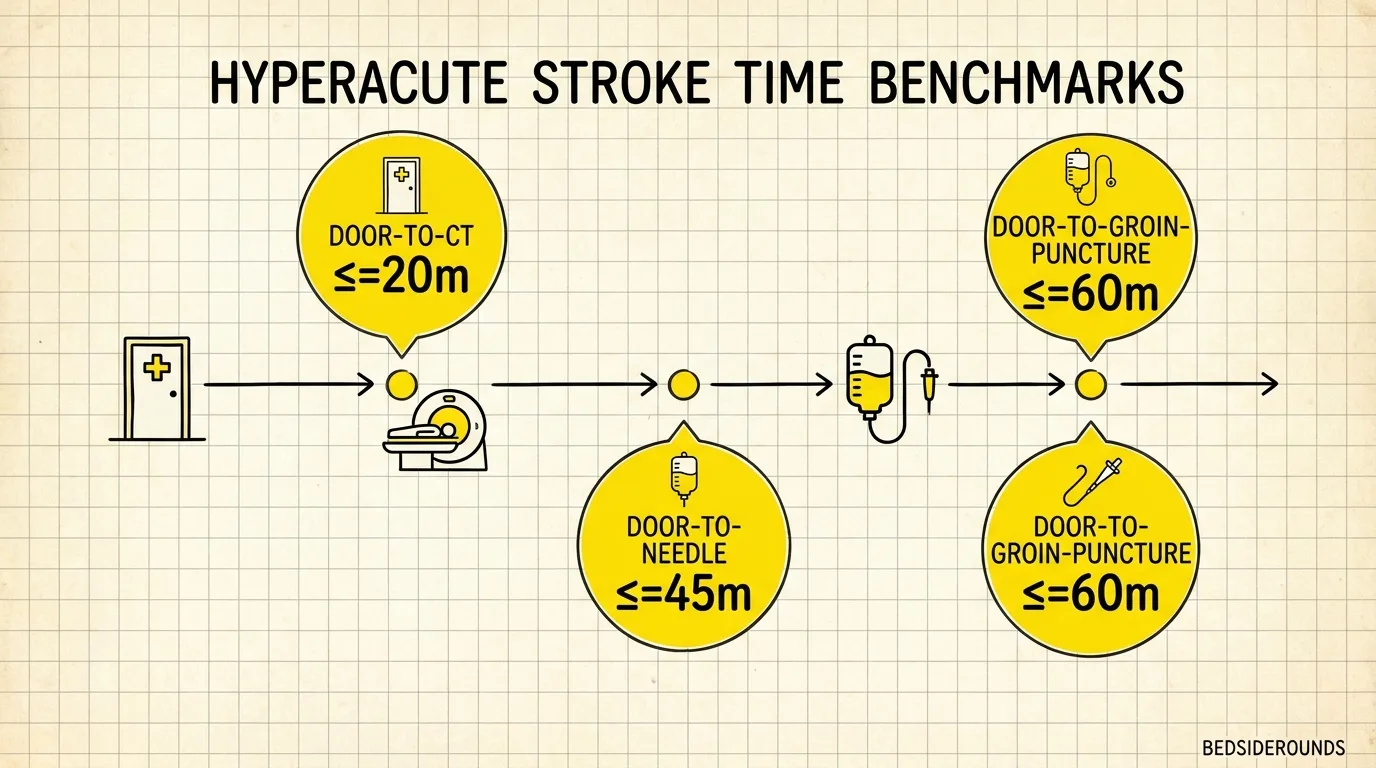
≤ 25 minutes.
- IV Thrombolysis Window: IV Alteplase / Tenecteplase (TNK) indicated within < 4.5 hours of Last Known Well (LKW).
- Mechanical Thrombectomy (EVT) Window: Indicated up to 24 hours for Large Vessel Occlusion (LVO) with CT Perfusion mismatch.
- Blood Pressure Target: SBP must be < 185/110 mmHg BEFORE administering IV Thrombolysis (maintain < 180/105 mmHg for 24 hours post-thrombolysis).---
📌 Interactive Table of Contents (Index)
- 1. Introduction & Stroke Hyperacute Workflow
- 2. NIHSS Score & Stroke Severity Grid
- 3. Non-Contrast CT & ASPECTS Scoring
- 4. Reperfusion Therapy: IV Thrombolysis vs EVT
- 5. Post-Thrombolysis Blood Pressure Protocol
- 6. Advanced Perfusion Metrics
- 7. Flagship Worked Clinical Case Study
- 8. High-Yield Clinical Pearls & Pitfalls
---
1. Introduction & Stroke Hyperacute Workflow
Hyperacute ischemic stroke management requires a rapid multidisciplinary "Stroke Code" response to achieve prompt arterial recanalization.
---
2. NIHSS Score & Stroke Severity Grid
The National Institutes of Health Stroke Scale (NIHSS) quantifies neurological deficit severity:
| NIHSS Score Range | Stroke Severity Classification | Reperfusion Candidates |
|---|---|---|
| 0 – 4 | Minor / Mild Stroke | Evaluate if disabling symptoms present |
| 5 – 15 | Moderate Stroke | Candidate for IV Thrombolysis & EVT |
| 16 – 20 | Moderate-to-Severe Stroke | High likelihood of LVO (Large Vessel Occlusion) |
| 21 – 42 | Severe Stroke | Urgent EVT candidate; high hemorrhagic risk |
---
3. Non-Contrast CT & ASPECTS Scoring
Initial Non-Contrast CT (NCCT) rules out intracranial hemorrhage and assesses early ischemic changes:
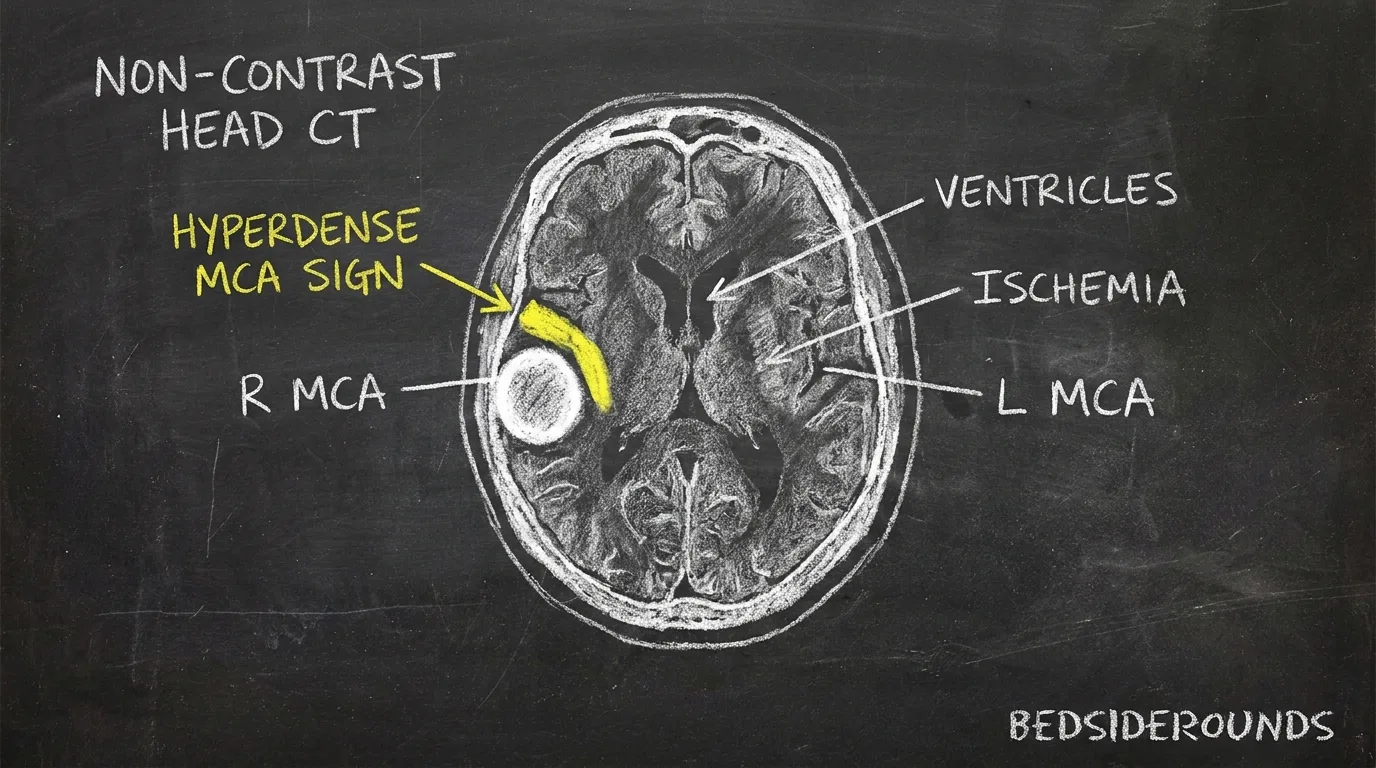
- Hyperdense MCA Sign: Represents acute thrombus in the middle cerebral artery.
- ASPECTS Score (0–10): 10 regions of MCA territory evaluated. ASPECTS < 6 indicates large established core infarction.
---
4. Reperfusion Therapy: IV Thrombolysis vs EVT
Select reperfusion modalities based on Last Known Well (LKW) and LVO status:

| Therapy | Target Window | Key Eligibility Criteria | Key Absolute Contraindications |
|---|---|---|---|
| IV Tenecteplase (TNK) | < 4.5 Hours of LKW | Dose 0.25 mg/kg IV bolus (max 25 mg) | Active ICH, SBP >185/110, head trauma <3 mo |
| Mechanical Thrombectomy | < 24 Hours of LKW | LVO (ICA or M1 MCA) + Penumbral mismatch | Large established core (ASPECTS < 3) |
---
5. Post-Thrombolysis Blood Pressure Protocol
Strict blood pressure control prevents hemorrhagic transformation post-thrombolysis:
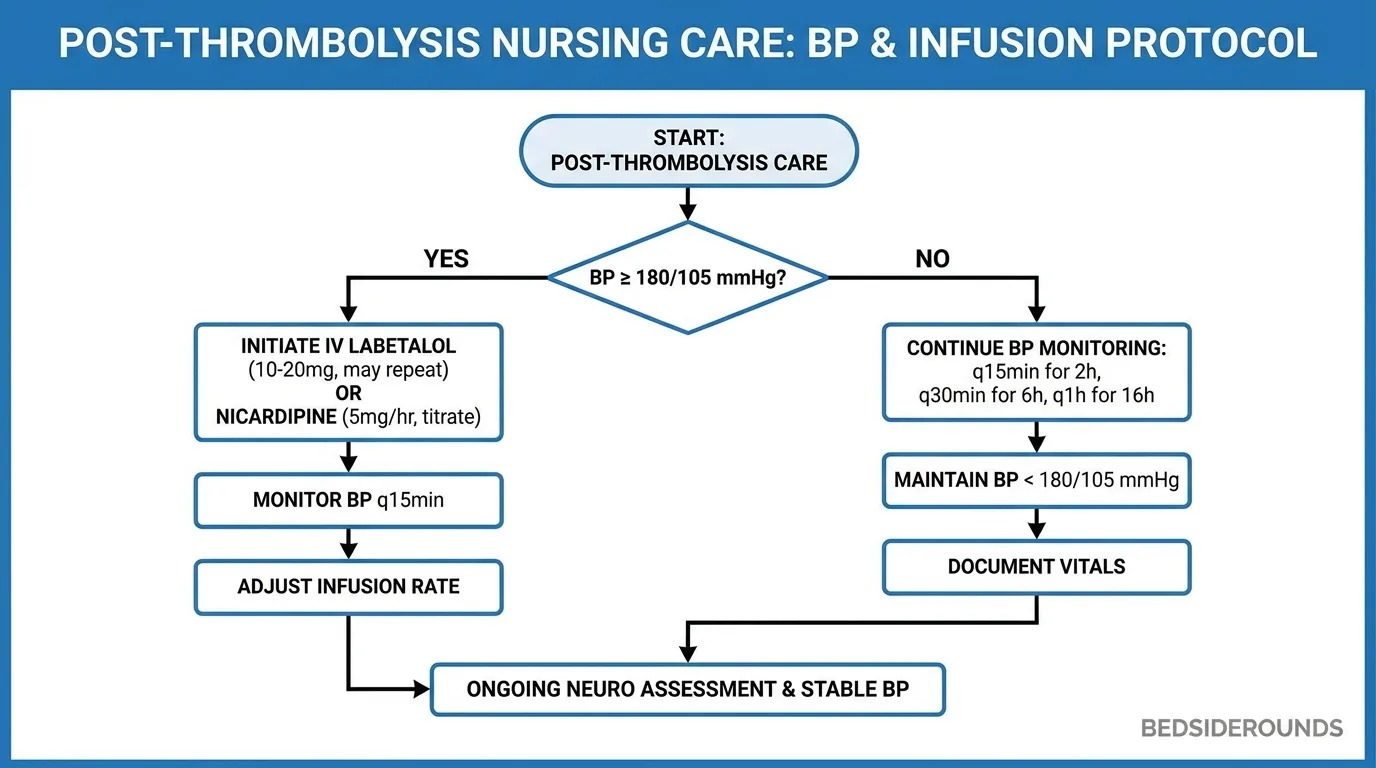
- Pre-Thrombolysis: Lower BP to
< 185/110 mmHgusing IV Labetalol 10–20 mg or IV Nicardipine infusion. - Post-Thrombolysis (First 24 Hours): Maintain BP
< 180/105 mmHg. Monitor BP q15min × 2 hours, then q30min × 6 hours, then q1h × 16 hours.
---
6. Advanced Perfusion Metrics
▶ Ischemic Penumbra vs Infarct Core Ratio
- Infarct Core: Tmax > 6.0 sec + CBF < 30% (Irreversibly damaged tissue).
- Ischemic Penumbra: Tmax > 6.0 sec with preserved CBF (Salvageable tissue with EVT!).
- Mismatch Ratio Target: Penumbra / Core ratio
≥ 1.8qualifies for extended-window thrombectomy.
---
7. Flagship Worked Clinical Case Study
Worked Case: Hyperacute Proximal MCA Occlusion
Case StudyA 64-year-old male presents 90 minutes after sudden onset right hemiplegia, aphasia, and forced left gaze deviation (NIHSS 18). BP is 192/108 mmHg.
#### 📊 Patient Lab & Neuro Panel
| Diagnostic Parameter | Measured Value | Reference Range | Diagnostic Interpretation |
|---|---|---|---|
| Blood Pressure | 192 / 108 mmHg | 120/80 mmHg | Elevated (Exceeds 185/110 cutoff) |
| NIHSS Score | 18 / 42 | 0 | Severe Deficit (LVO Suspected) |
| NCCT Head | Hyperdense Right MCA | Normal | Acute MCA Thrombus (ASPECTS 9) |
| CTA Head/Neck | M1 Segment Occlusion | Patent | Large Vessel Occlusion (LVO) |
| Glucose | 118 mg/dL | 70–140 mg/dL | Hypoglycemia mimic excluded |
#### ⚡ Step-by-Step Clinical Decision Flowchart
Step 1: BP Management    → Give IV Labetalol 20 mg IV push to lower BP below 185/110 (Reaches 172/94 mmHg)
Step 2: IV Thrombolysis  → Administer IV Tenecteplase (TNK) 0.25 mg/kg bolus at 105 min post-LKW
Step 3: Cath Activation  → Direct transfer to Angio Suite for Endovascular Thrombectomy (EVT)
Step 4: Recanalization   → Successful TICI 3 recanalization achieved at 155 minutes post-LKW
Step 5: Post-EVT Target  → Maintain SBP < 180/105 mmHg for 24 hours + Repeat NCCT at 24 hours
---
8. High-Yield Clinical Pearls & Pitfalls
Clinically Related Case Posters
Sudden Weakness on One Side of the Body
Atrial Fibrillation. Hypertension. Newly detected Dyslipidemia
Sudden Fast Irregular Heartbeat with Breathlessness
Essential Hypertension (15 years, on treatment). Type 2 Diabetes Mellitus (...
Routine Follow-up for Blood Pressure Check
Type 2 Diabetes Mellitus. Essential Hypertension
Test Your Decision-Making in Hyperacute MCA Stroke with Large Vessel Occlusion
Experience this exact clinical scenario in the Bedside Rounds interactive simulator. Order investigations, manage door-to-needle timing, and witness real-time physiological feedback.