Acute Ischemic Stroke Clinical Management: Evidence-Based Master Guide
Master acute stroke initial assessment, ASPECTS scoring grid, blood pressure target badges, and Stroke Code triage flowcharts.
Table of Contents (10 Sections)
Acute Ischemic Stroke Clinical Management: Evidence-Based Master Guide
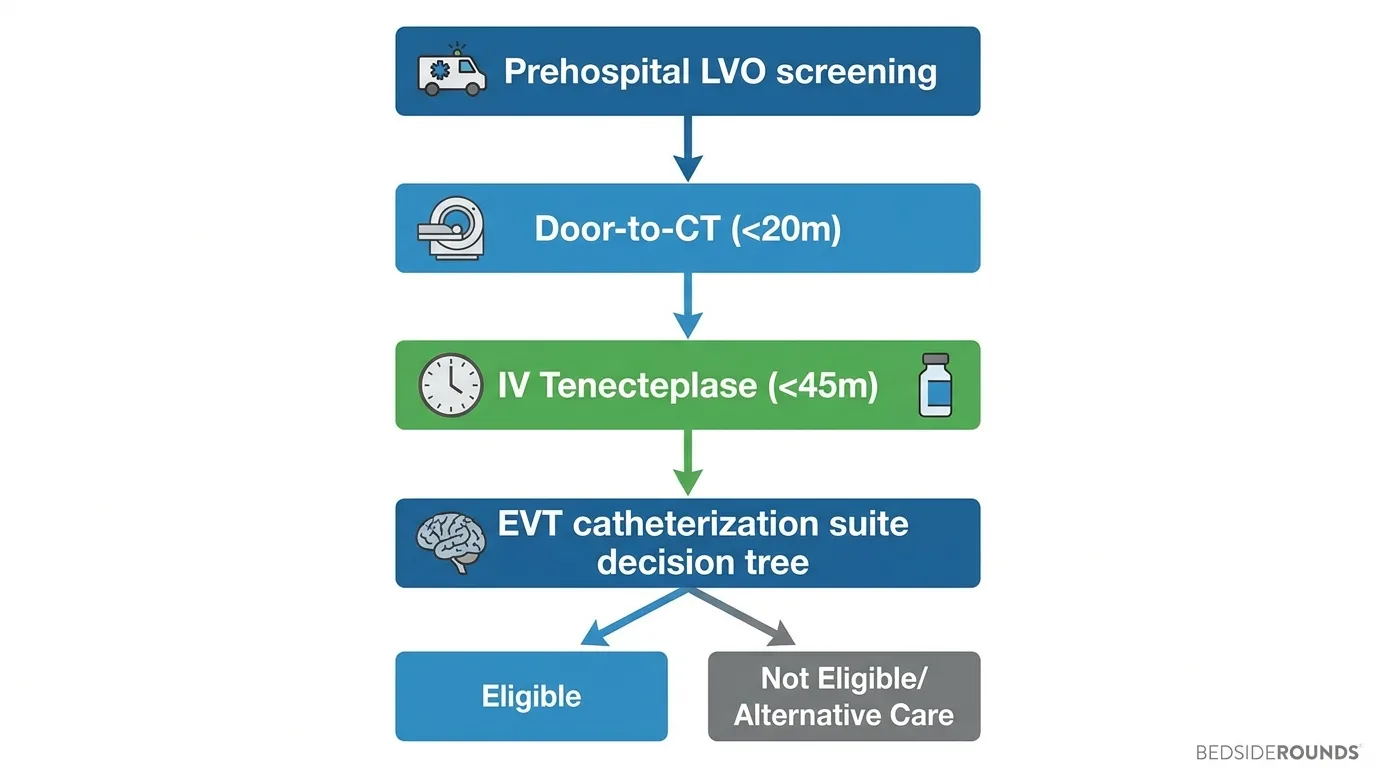
≤ 25 minutes. Door-to-Needle thrombolysis target is ≤ 45 minutes.
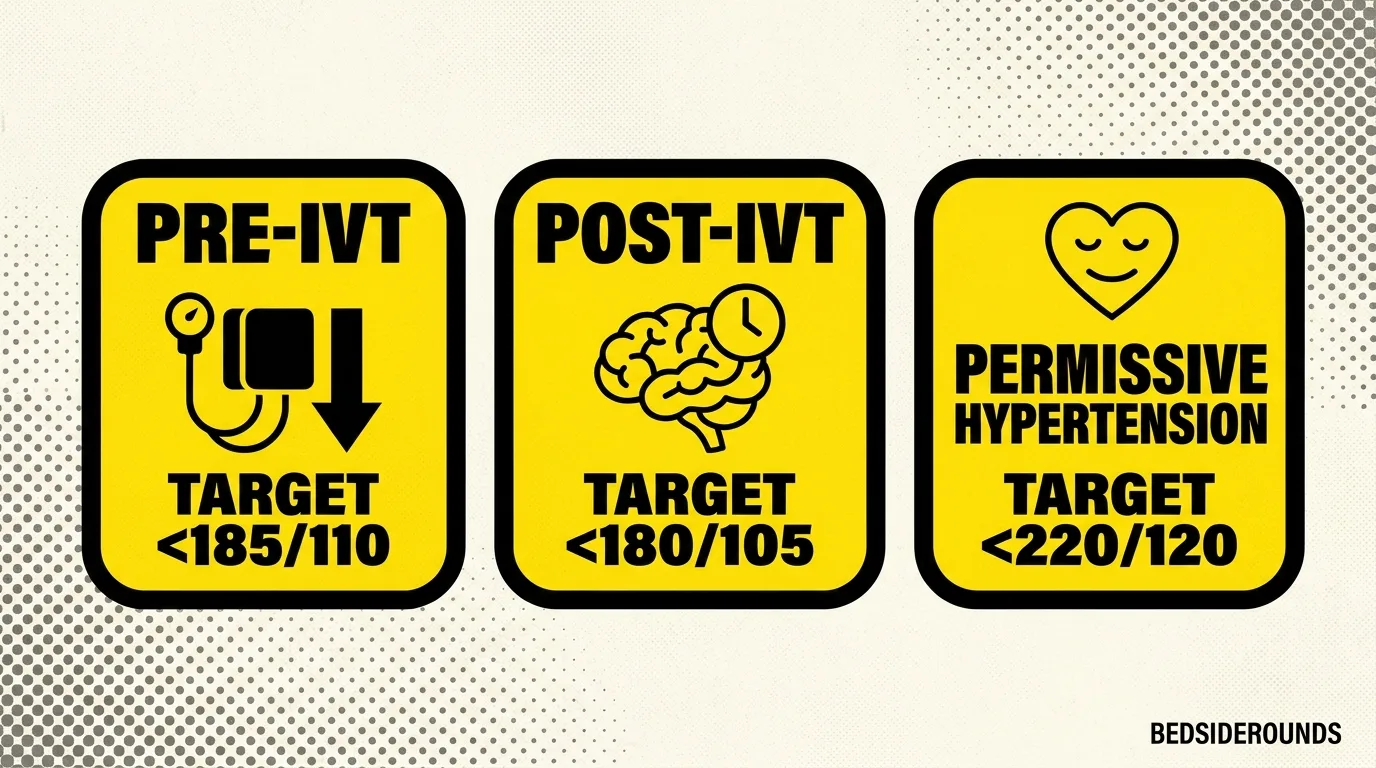
- Blood Pressure Control: SBP must be < 185/110 mmHg prior to IV Thrombolysis. Maintain SBP < 180/105 mmHg for 24 hours post-thrombolysis.
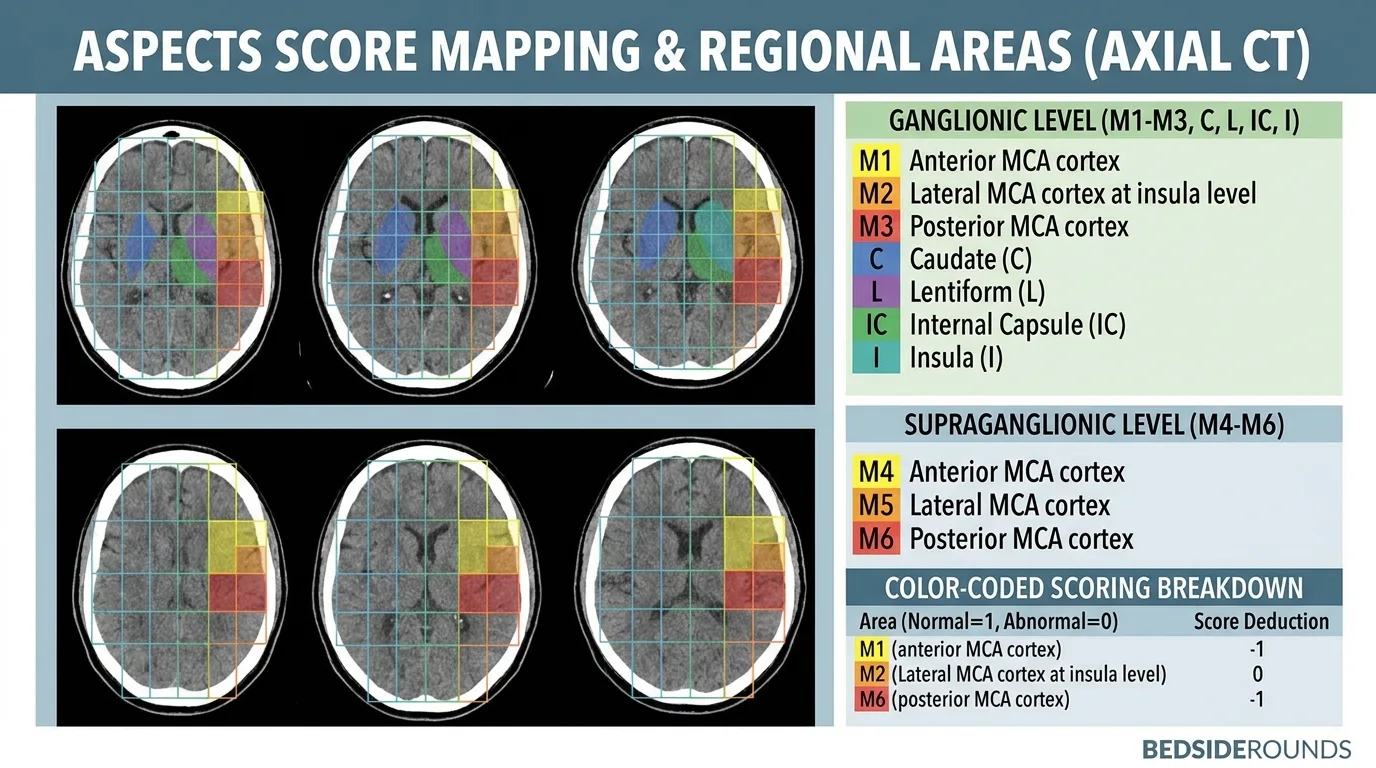
- ASPECTS Score Benchmark: ASPECTS ≥ 6 indicates favorable penumbral salvage for mechanical thrombectomy (EVT).
- Post-Stroke Antithrombotic Rule: Delay aspirin and antiplatelet therapy for 24 hours post-thrombolysis until 24-hour follow-up NCCT rules out hemorrhage.---
📌 Interactive Table of Contents (Index)
- 1. Introduction & Hyperacute Workflow
- 2. Stroke Code Triage Algorithm
- 3. Non-Contrast CT & ASPECTS Scoring Grid
- 4. Blood Pressure Targets & Management Badges
- 5. Reperfusion Therapy: Thrombolysis vs EVT Table
- 6. Advanced Neurovascular Metrics
- 7. Flagship Worked Clinical Case Study
- 8. High-Yield Clinical Pearls & Diagnostic Traps
---
1. Introduction & Hyperacute Workflow
Acute ischemic stroke management demands systematic rapid triage to minimize ischemic cell death (1.9 million neurons lost per minute).
---
2. Stroke Code Triage Algorithm
Follow this immediate resuscitation and imaging pathway:
- Step 1: Rapid Triage (BE-FAST)
- - Assess Balance, Eyes, Face, Arm weakness, Speech difficulty, and Time of onset (Last Known Well).
- Step 2: Fingerstick Blood Glucose
- - Stat capillary glucose to exclude hypoglycemia (<60 mg/dL).
- Step 3: Stat Non-Contrast CT (NCCT)
- - Complete NCCT head within 25 minutes to exclude intracranial hemorrhage.
---
3. Non-Contrast CT & ASPECTS Scoring Grid
The Alberta Stroke Program Early CT Score (ASPECTS) divides the MCA territory into 10 anatomical regions:
| ASPECTS Region | Anatomical Location | Ischemic Sign | |
|---|---|---|---|
| Subcortical (4) | Caudate, Lentiform, Internal Capsule, Insular Ribbon | Hypodensity / Loss of Gray-White Distinction | |
| Cortical (6) | M1 (Anterior), M2 (Lateral), M3 (Posterior), M4, M5, M6 | Sulcal Effacement / Cortical Hypodensity | |
| Scoring Rule | Start at 10 points; subtract 1 point for each affected region | Score ≥6 = Favorable | Score <6 = Large Core |
---
4. Blood Pressure Targets & Management Badges
Strict blood pressure protocols prevent hemorrhagic transformation post-thrombolysis:
| Clinical Scenario | SBP / DBP Target | Preferred Pharmacotherapy |
|---|---|---|
| Pre-IV Thrombolysis Candidate | < 185 / 110 mmHg | IV Labetalol 10–20 mg IV push OR IV Nicardipine 5 mg/hr |
| Post-IV Thrombolysis (24 Hours) | < 180 / 105 mmHg | Monitor q15min × 2h, q30min × 6h, q1h × 16h |
| Non-Thrombolysis Candidate | Permissive Hypertension < 220 / 120 mmHg | Do not lower unless organ damage or SBP >220 |
---
5. Reperfusion Therapy: Thrombolysis vs EVT Table
| Therapy Modality | Time Window | Key Inclusion Criteria | Primary Exclusions |
|---|---|---|---|
| IV Tenecteplase (TNK) | < 4.5 Hours of LKW | Dose 0.25 mg/kg IV bolus (max 25 mg) | Active hemorrhage, SBP >185/110, INR >1.7 |
| Mechanical Thrombectomy | < 24 Hours of LKW | LVO (ICA, M1 MCA) + Penumbral Mismatch | Large established core (ASPECTS < 3) |
---
6. Advanced Neurovascular Metrics
▶ Collateral Circulation Score on CTA
- Grade 0: Absence of collateral supply to ischemic territory.
- Grade 1: Minimal collaterals (< 50% territory reconstituted).
- Grade 2: Moderate collaterals (50%–99% territory reconstituted).
- Grade 3: Complete collaterals (100% territory reconstituted; favorable EVT candidate!).
---
7. Flagship Worked Clinical Case Study
Worked Case: Hyperacute Stroke with Borderline Blood Pressure
Case StudyA 66-year-old female presents 80 minutes after sudden right-sided weakness and aphasia (NIHSS 14). BP on arrival is 196/114 mmHg.
#### 📊 Patient Lab & Neuro Panel
| Diagnostic Parameter | Measured Value | Reference Range | Diagnostic Interpretation |
|---|---|---|---|
| Blood Pressure | 196 / 114 mmHg | 120/80 mmHg | Exceeds 185/110 cutoff for IV TNK |
| NIHSS Score | 14 / 42 | 0 | Moderate-to-Severe Deficit |
| NCCT Head | No Hemorrhage (ASPECTS 9) | Normal | Intracranial Hemorrhage Ruled Out |
| Blood Glucose | 124 mg/dL | 70–140 mg/dL | Hypoglycemia Excluded |
#### ⚡ Step-by-Step Clinical Decision Flowchart
Step 1: Acute BP Control → Administer IV Labetalol 20 mg IV push (BP drops to 174/96 mmHg within 10 min)
Step 2: IV Thrombolysis  → Administer IV Tenecteplase (TNK) 0.25 mg/kg bolus at 95 minutes post-LKW
Step 3: CTA Head/Neck    → Identifies M1 MCA occlusion → Stat transfer to Endovascular Suite
Step 4: Thrombectomy     → Successful TICI 2b/3 stent retriever thrombectomy completed
Step 5: Post-tPA Care    → Maintain SBP < 180/105 mmHg on Nicardipine infusion; stat 24h NCCT scheduled
---
8. High-Yield Clinical Pearls & Diagnostic Traps
Clinically Related Case Posters
Sudden Weakness on One Side of the Body
Atrial Fibrillation. Hypertension. Newly detected Dyslipidemia
Sudden Fast Irregular Heartbeat with Breathlessness
Essential Hypertension (15 years, on treatment). Type 2 Diabetes Mellitus (...
Prolonged Seizure After Missed Antiseizure Medications
Generalized epilepsy diagnosed age 18 — 20-year history. Essential hyperten...
Test Your Decision-Making in Hyperacute MCA Stroke with Large Vessel Occlusion
Experience this exact clinical scenario in the Bedside Rounds interactive simulator. Order investigations, manage door-to-needle timing, and witness real-time physiological feedback.