HELLP Syndrome Clinical Guidelines: Diagnosis & Emergency Management
Master HELLP syndrome diagnosis, Mississippi vs Tennessee criteria, hepatic hematoma detection, magnesium sulfate neuroprotection, and delivery timing.
Table of Contents (10 Sections)

HELLP Syndrome Clinical Guidelines: Diagnosis & Emergency Management
< 100,000 /mcL).
- Definitive Treatment: Delivery of fetus and placenta is the ONLY definitive cure for HELLP syndrome.
- Eclampsia Prevention: Initiate IV Magnesium Sulfate loading dose (4–6 g IV over 20 min) followed by 1–2 g/hr infusion.
- Surgical Emergency Red Flag: Sudden right upper quadrant (RUQ) / epigastric pain radiating to right shoulder + acute severe hypotension indicates Subcapsular Hepatic Hematoma Rupture!---
📌 Interactive Table of Contents (Index)
- 1. Introduction & Diagnostic Triad
- 2. Tennessee vs Mississippi Classification Table
- 3. Emergency Management & Resuscitation Protocol
- 4. Hepatic Hematoma & Surgical Complications
- 5. Magnesium Sulfate & Antihypertensive Regimens
- 6. Advanced Diagnostic Metrics
- 7. Flagship Worked Clinical Case Study
- 8. High-Yield Clinical Pearls & Diagnostic Traps
---
1. Introduction & Diagnostic Triad
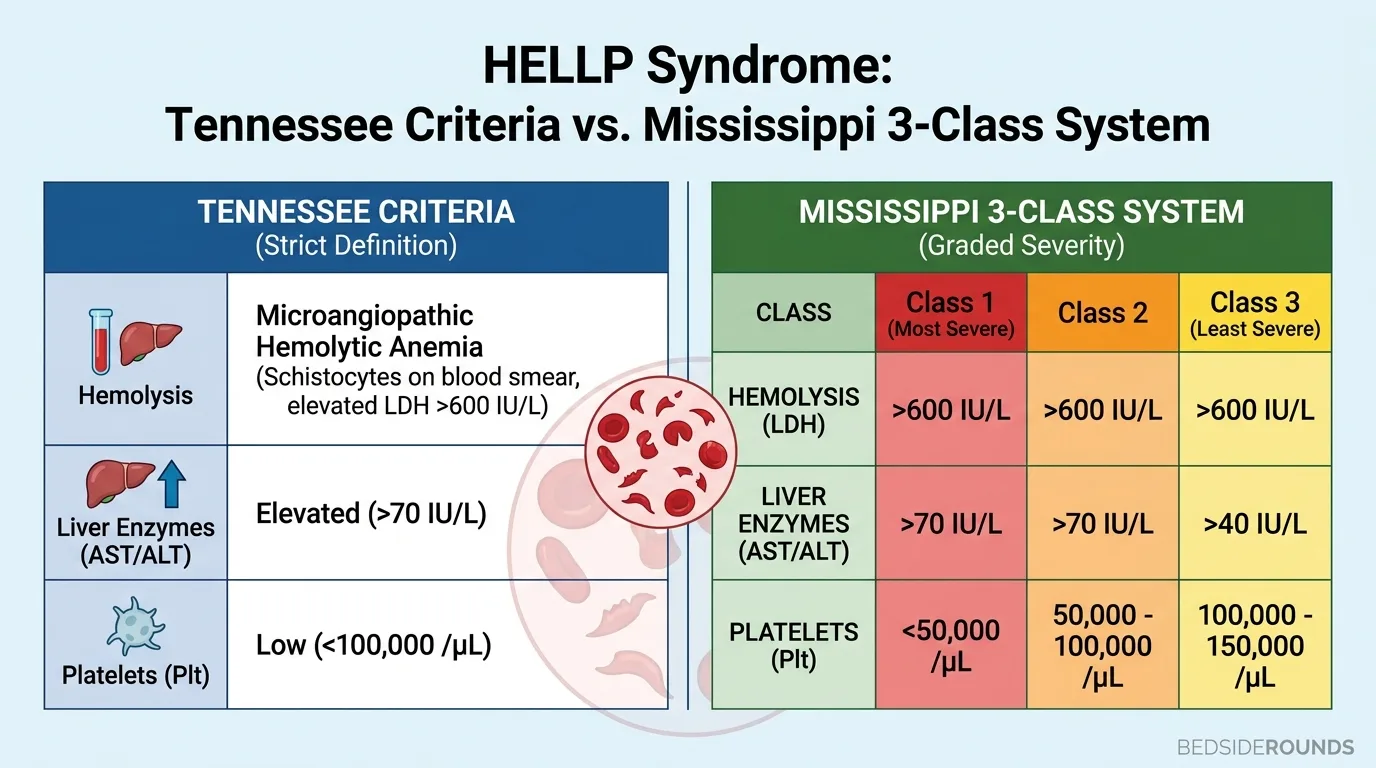
HELLP syndrome is a severe, life-threatening obstetric complication considered a variant or spectrum of preeclampsia with severe features.
---
2. Tennessee vs Mississippi Classification Table
Diagnostic cutoff criteria for HELLP classification:
| Parameter | Tennessee Criteria (Strict Complete HELLP) | Mississippi Class 1 (Severe) | Mississippi Class 2 (Moderate) | Mississippi Class 3 (Mild) |
|---|---|---|---|---|
| Platelets | < 100,000 /mcL | < 50,000 /mcL | 50,000 – 100,000 /mcL | 100,000 – 150,000 /mcL |
| AST / ALT | ≥ 70 IU/L | ≥ 70 IU/L | ≥ 70 IU/L | ≥ 40 IU/L |
| LDH | ≥ 600 IU/L | ≥ 600 IU/L | ≥ 600 IU/L | ≥ 600 IU/L |
| Peripheral Smear | Schistocytes, Helmet Cells | Microangiopathic Hemolysis | Microangiopathic Hemolysis | Microangiopathic Hemolysis |
---
3. Emergency Management & Resuscitation Protocol
Follow this emergency protocol upon diagnosis of HELLP syndrome:
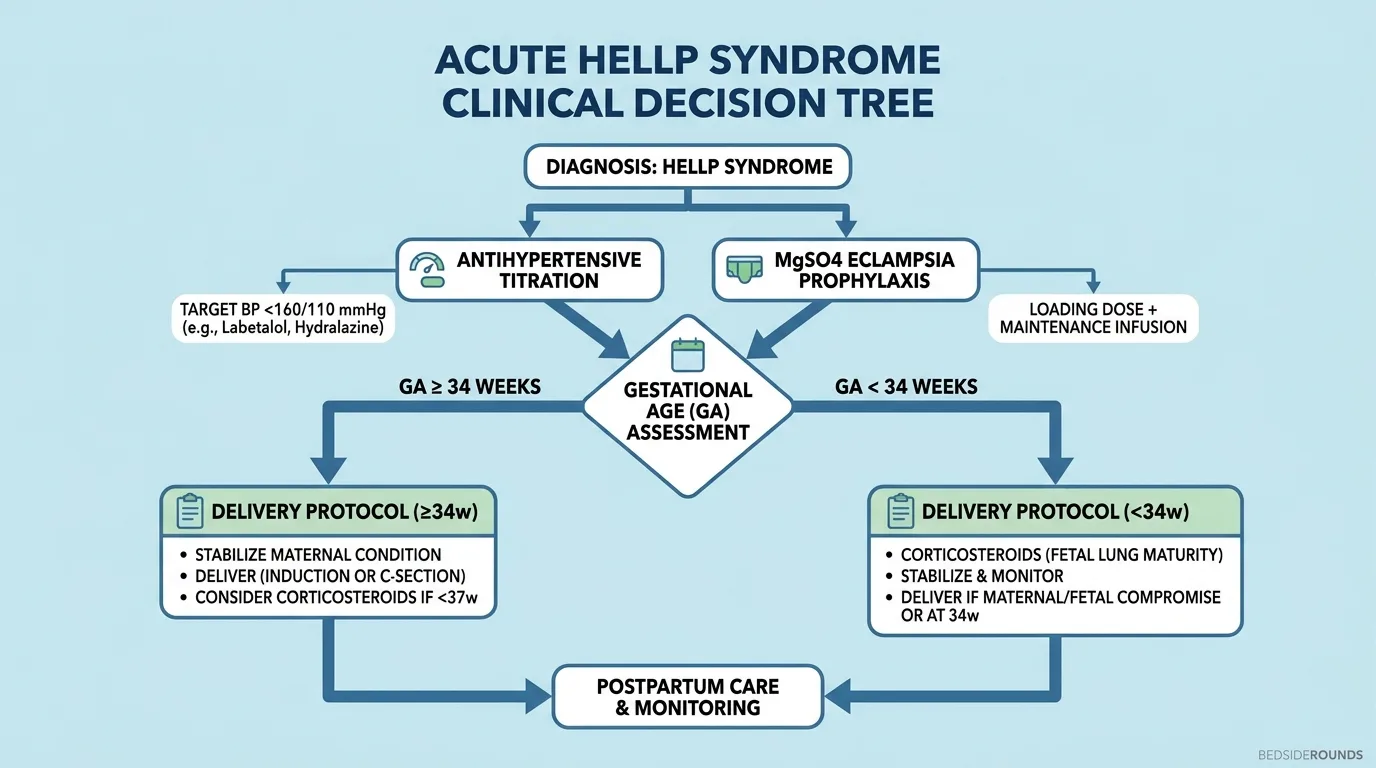
- Step 1: Maternal Stabilization & Blood Pressure Control
- - Treat severe hypertension (
SBP ≥ 160orDBP ≥ 110 mmHg) within 30 minutes using IV Labetalol or IV Hydralazine. - Step 2: Seizure Prophylaxis
- - Start IV Magnesium Sulfate (
4–6 g IV loadfollowed by2 g/hrinfusion). - Step 3: Antenatal Corticosteroids (< 34 Weeks)
- - Administer Dexamethasone 6 mg IM q12h × 4 doses for fetal lung maturity.
- Step 4: Delivery Decision
- - Delivery indicated after maternal stabilization if
≥ 34 weeksOR if severe features present regardless of gestational age.
---
4. Hepatic Hematoma & Surgical Complications
Subcapsular hepatic hematoma rupture is a rare but catastrophic complication:
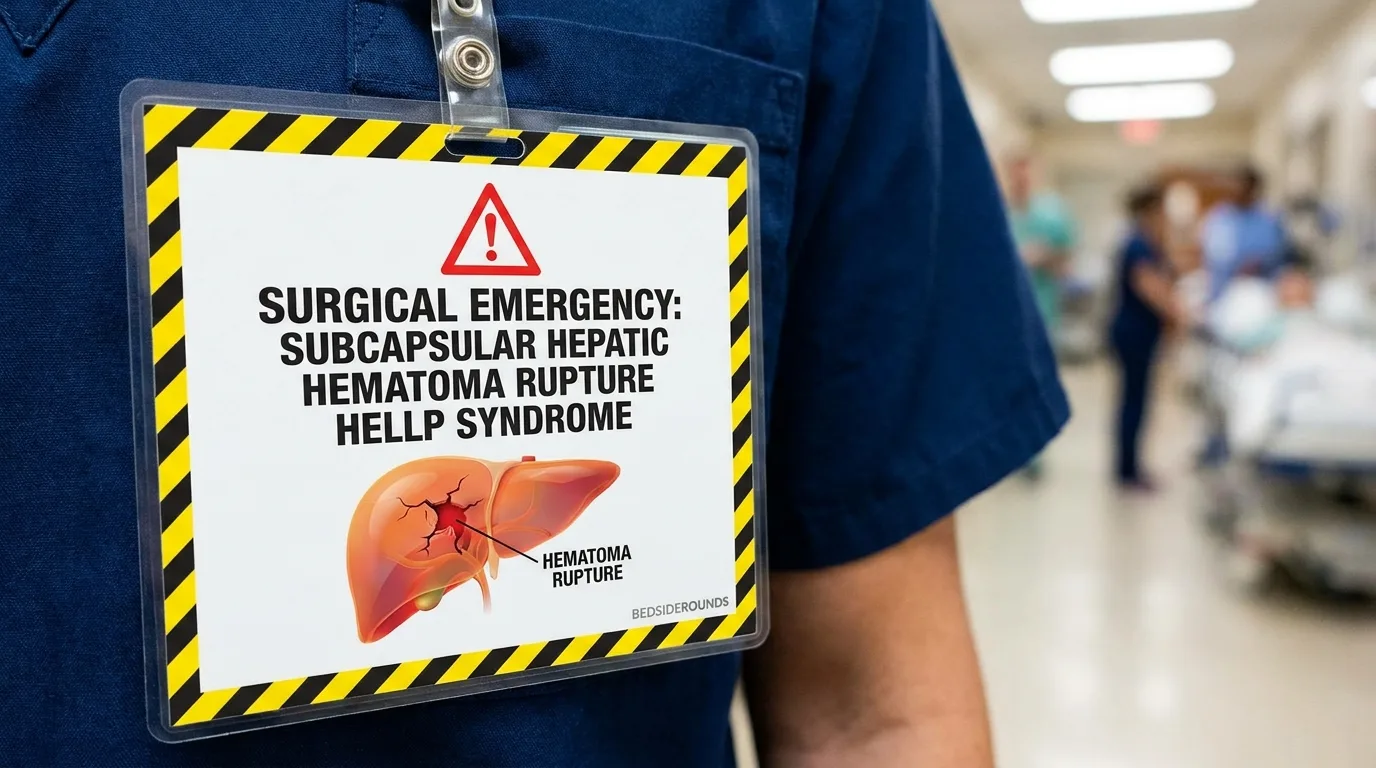
- Clinical Triad: HELLP syndrome + Severe RUQ/Epigastric Pain + Sudden Unexplained Hypovolemic Shock.
- Immediate Management: Stat Abdominal Ultrasound / CT + Massive Transfusion Protocol + Emergency Exploratory Laparotomy / Hepatic Artery Embolization.
---
5. Magnesium Sulfate & Antihypertensive Regimens
| Drug Agent | Dosing Regimen | Monitoring Cutoffs | Reversal Agent |
|---|---|---|---|
| Magnesium Sulfate | 4–6 g IV bolus over 20 min, then 1–2 g/hr | Patellar reflexes, Resp Rate >12, Urine >30 mL/hr | Calcium Gluconate 1 g IV |
| IV Labetalol | 20 mg IV push, repeat 40–80 mg q10min (max 300 mg) | Avoid in asthma or severe bradycardia | Atropine |
| IV Hydralazine | 5–10 mg IV push q20min (max 30 mg) | Watch for maternal reflex tachycardia | Fluids |
---
6. Advanced Diagnostic Metrics
▶ sFlt-1 / PlGF Ratio for Preeclampsia / HELLP Prediction
- sFlt-1 / PlGF Ratio ≤ 38: High negative predictive value (>99%) to rule out preeclampsia/HELLP within 1 week.
- sFlt-1 / PlGF Ratio > 85: High positive predictive value for impending preeclampsia with severe features.
---
7. Flagship Worked Clinical Case Study
Worked Case: Severe HELLP Syndrome at 32 Weeks
Case StudyA 29-year-old G1P0 at 32 weeks gestation presents with epigastric pain, severe headache, BP of 172/112 mmHg, and urine protein 3+.
#### 📊 Patient Lab & Obstetric Panel
| Diagnostic Parameter | Measured Value | Reference Range | Diagnostic Interpretation |
|---|---|---|---|
| Blood Pressure | 172 / 112 mmHg | 120/80 mmHg | Severe Hypertensive Emergency |
| Platelet Count | 34,000 /mcL | 150,000–450,000 | Mississippi Class 1 Severe HELLP |
| AST / ALT | 340 / 290 IU/L | 10–40 IU/L | Severe Hepatic Transaminitis |
| LDH | 1,420 IU/L | 140–280 IU/L | Microangiopathic Hemolysis |
| Peripheral Smear | Schistocytes Present | None | Fragmented Red Blood Cells |
#### ⚡ Step-by-Step Clinical Decision Flowchart
Step 1: Diagnostic Triad → Hemolysis (LDH 1420) + Transaminitis (AST 340) + Low Platelets (34k) = Class 1 HELLP
Step 2: Acute BP Control → Administer IV Labetalol 20 mg IV push (BP drops to 142/90 mmHg within 15 min)
Step 3: Seizure Prevention → Start IV Magnesium Sulfate 6g bolus + 2g/hr continuous infusion
Step 4: Transfusion Plan  → Transfuse 1 unit Platelets prior to Cesarean section (target >50,000 /mcL)
Step 5: Delivery Action   → Emergency Cesarean Section under General Anesthesia (Maternal-Fetal Cure)
---
8. High-Yield Clinical Pearls & Diagnostic Traps
Clinically Related Case Posters
High Blood Pressure in Late Pregnancy with Severe Headache
Chronic Hypertension. Gestational Diabetes. Obesity. Gestational Hypothyroi...
Sudden Lower Abdominal Pain and Dizziness in a Young Woman
Previous Chlamydia trachomatis infection (treated 3 years ago). Copper intr...
Test Your Decision-Making in Severe HELLP Syndrome with Subcapsular Hepatic Hematoma
Experience this exact clinical scenario in the Bedside Rounds interactive simulator. Order investigations, manage door-to-needle timing, and witness real-time physiological feedback.