Sepsis-3 Resuscitation Guidelines: Emergency Management Masterclass
Master Sepsis-3 criteria, SOFA vs qSOFA scoring, 1-hour bundle resuscitation, vasopressor titration, and septic shock management.
Table of Contents (11 Sections)
Sepsis-3 Resuscitation Guidelines: Emergency Management Masterclass
≥ 2 points).
- Septic Shock Definition: Sepsis + Vasopressor requirement to maintain MAP ≥ 65 mmHg AND Serum Lactate > 2 mmol/L despite fluid resuscitation.
- 1-Hour Sepsis Bundle: 1. Measure Lactate → 2. Obtain Blood Cultures → 3. Administer Broad-Spectrum Antibiotics → 4. Give 30 mL/kg IV Crystalloid for hypotension/lactate ≥4 → 5. Start Norepinephrine for MAP <65.
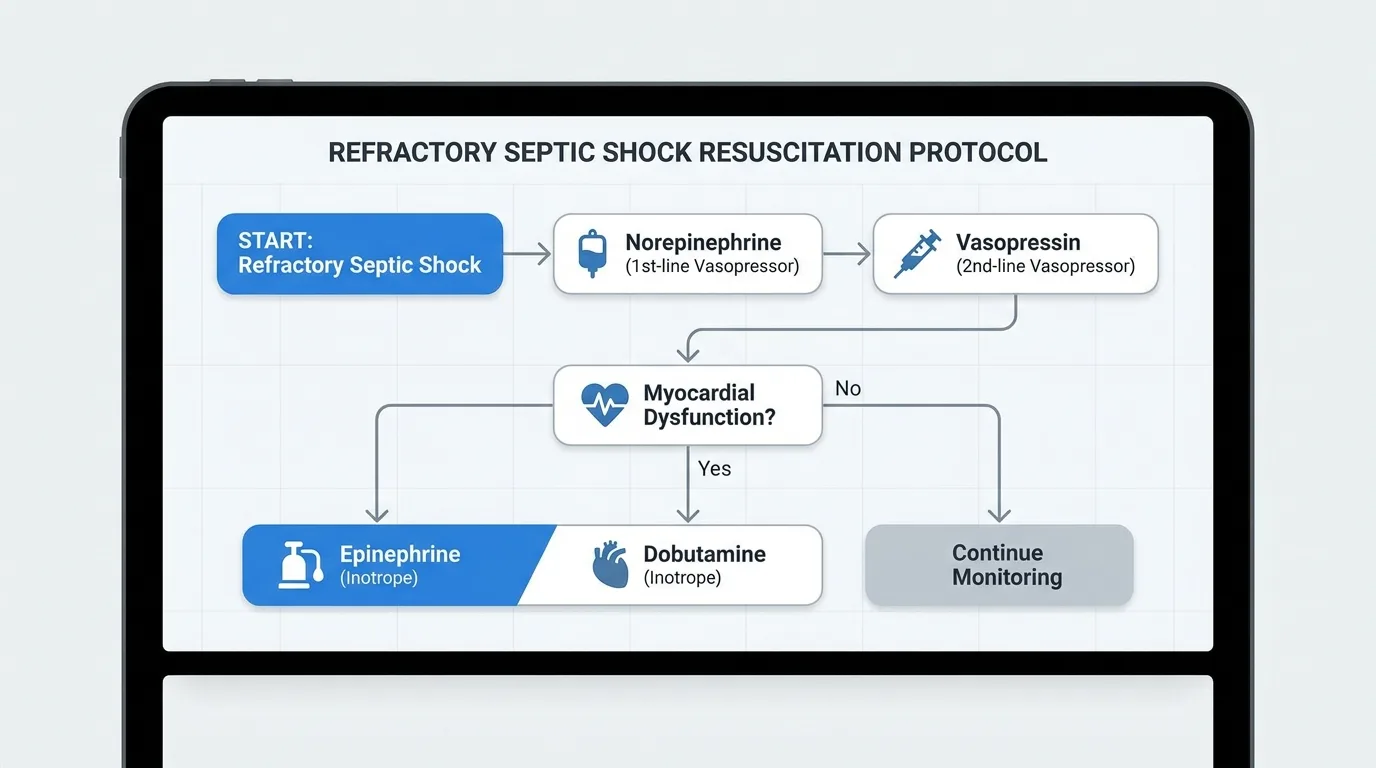
- First-Line Vasopressor: Norepinephrine (Target MAP ≥ 65 mmHg). Add Vasopressin (0.03 U/min) if norepinephrine dose is escalating.---
📌 Interactive Table of Contents (Index)
- 1. Introduction & Sepsis-3 Definitions
- 2. qSOFA vs SOFA Score Comparison
- 3. The Surviving Sepsis 1-Hour Bundle
- 4. Fluid Resuscitation & Hemodynamic Monitoring
- 5. Vasopressor & Inotrope Selection Table
- 6. Advanced Resuscitation Equations
- 7. Flagship Worked Clinical Case Study
- 8. High-Yield Clinical Pearls & Diagnostic Pitfalls
---
1. Introduction & Sepsis-3 Definitions
Sepsis is a medical emergency where time to antibiotic administration and fluid resuscitation directly impacts patient survival.
Key Sepsis-3 Criteria
- Sepsis: Suspected Infection + Acute Increase in SOFA Score
≥ 2 points. - Septic Shock: Persistent hypotension requiring vasopressors for
MAP ≥ 65 mmHg+Serum Lactate > 2.0 mmol/Ldespite adequate fluid resuscitation (In-hospital mortality >40%).
---
2. qSOFA vs SOFA Score Comparison
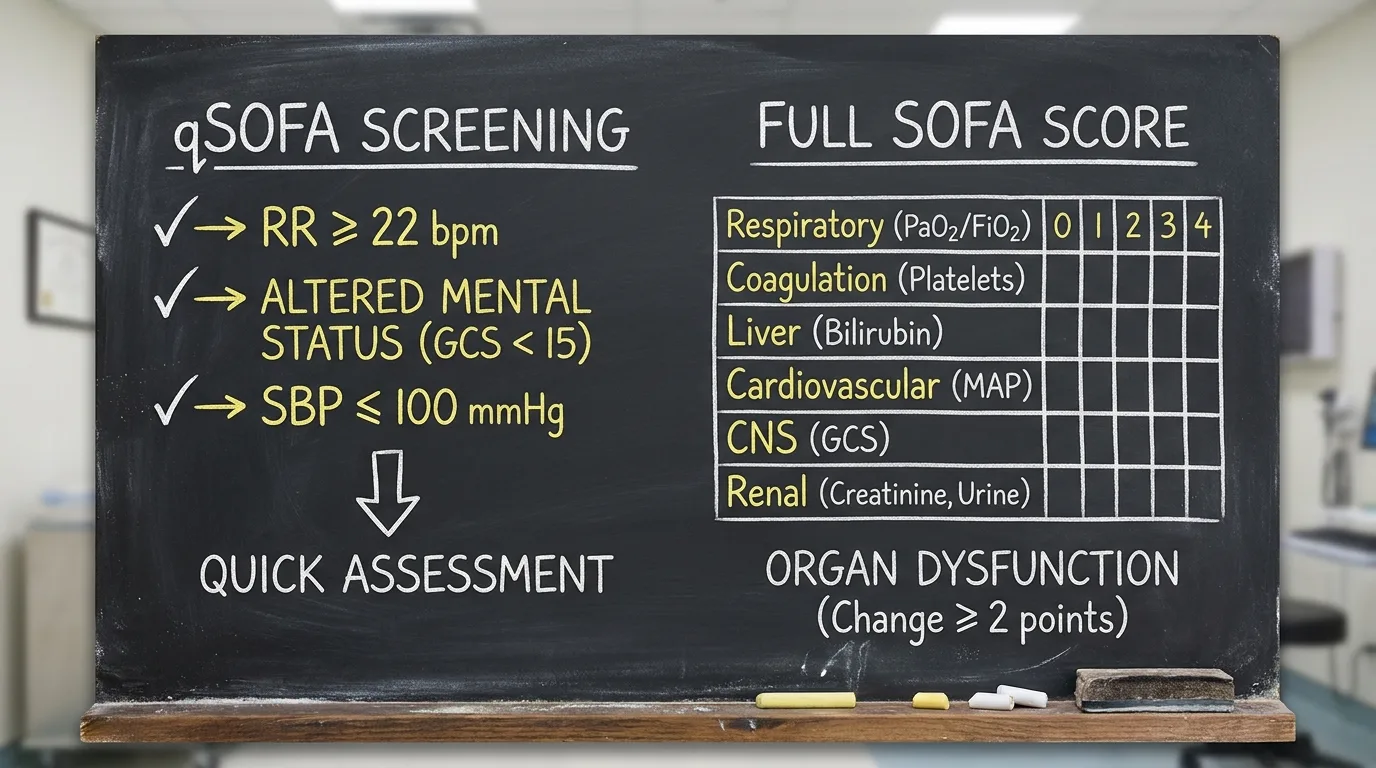
Quick Sequential Organ Failure Assessment (qSOFA) is a rapid bedside screening tool:
| Scoring System | Diagnostic Criteria | Positive Cutoff | Clinical Utility | ||
|---|---|---|---|---|---|
| qSOFA | 1. Resp Rate ≥22 | 2. Altered Mental Status (GCS <15) | 3. Systolic BP ≤100 | ≥ 2 points | Rapid bedside screening at triage |
| SOFA Score | PaO₂/FiO₂, Platelets, Bilirubin, MAP/Vasopressors, GCS, Creatinine/Urine | Δ SOFA ≥ 2 | ICU organ failure quantification |
---
3. The Surviving Sepsis 1-Hour Bundle
All 5 elements of the 1-hour bundle should be initiated immediately upon sepsis identification:
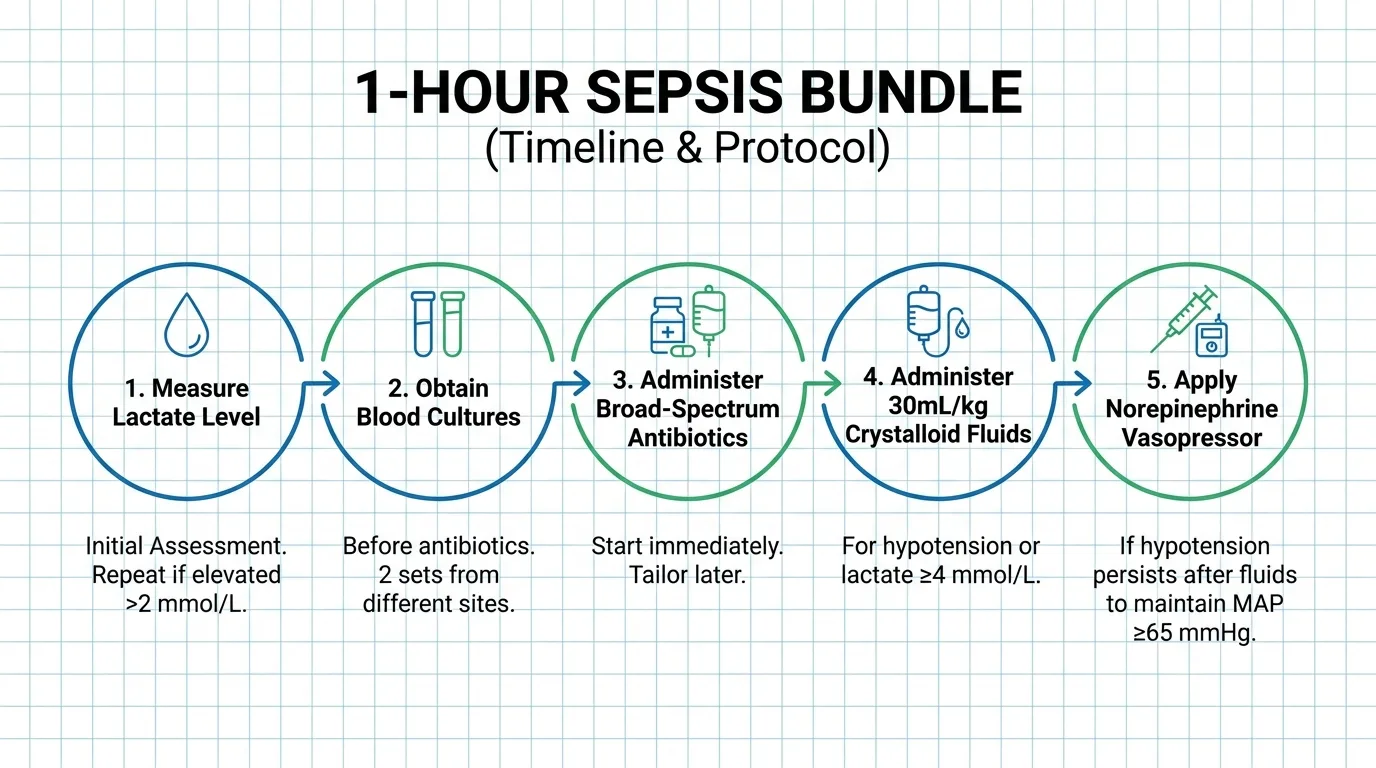
- 1.Measure Serum Lactate: Remeasure within 2–4 hours if initial lactate is > 2 mmol/L.
- 2.Obtain Blood Cultures: Draw 2 sets prior to antibiotic administration (don't delay antibiotics >45 min).
- 3.Administer Broad-Spectrum IV Antibiotics: Give IV Empiric Coverage within 60 minutes.
- 4.Begin Rapid Fluid Resuscitation: Administer
30 mL/kg Balanced Crystalloid(Lactated Ringer's) for hypotension or lactate ≥ 4.0 mmol/L. - 5.Apply Vasopressors: Start Norepinephrine during or after fluid resuscitation to maintain
MAP ≥ 65 mmHg.
---
4. Fluid Resuscitation & Hemodynamic Monitoring
Balanced crystalloids (Lactated Ringer's or Plasma-Lyte) are superior to 0.9% Normal Saline (which causes hyperchloremic metabolic acidosis).
- Dynamic Fluid Responsiveness: Assess Passive Leg Raise (PLR) or Stroke Volume Variation (SVV) rather than static CVP.
- Lactate Clearance Target: Aim for >10%–20% lactate clearance every 2 hours during active resuscitation.
---
5. Vasopressor & Inotrope Selection Table
Guideline-recommended vasoactive agent titration:
| Vasopressor Agent | Primary Mechanism | Line Status | Target Benchmark |
|---|---|---|---|
| Norepinephrine | Alpha-1 + Beta-1 agonist | First-Line | Titrate to MAP ≥ 65 mmHg |
| Vasopressin | V1 receptor agonist | Second-Line | Fixed dose 0.03 Units/min (Vaso-sparing) |
| Epinephrine | Beta-1 + Alpha-1 agonist | Second-Line / Add-on | Add if MAP target unachieved with Norepi |
| Dobutamine | Beta-1 inotrope | Inotrope Choice | Add if myocardial dysfunction / persistent hypoperfusion |
---
6. Advanced Resuscitation Equations
▶ Mean Arterial Pressure (MAP) Calculation Formula
Formula: MAP = SBP + (2 × DBP) / 3
- Target MAP in Septic Shock:
≥ 65 mmHgto maintain cerebral, renal, and coronary perfusion.
▶ Serum Lactate Clearance Percentage Formula
Formula: Lactate Clearance (%) = [(Initial Lactate - Repeat Lactate) / Initial Lactate] × 100
- Target Clearance:
≥ 10% to 20%clearance every 2 hours indicates effective tissue reperfusion.
---
7. Flagship Worked Clinical Case Study
Worked Case: Septic Shock Secondary to Urosepsis
Case StudyA 72-year-old female presents with fever (38.9°C), confusion, dark foul-smelling urine, and BP of 78/42 mmHg.
#### 📊 Patient Lab & Vitals Panel
| Diagnostic Parameter | Measured Value | Reference Range | Diagnostic Interpretation |
|---|---|---|---|
| Blood Pressure | 78 / 42 mmHg | 120/80 mmHg | Severe Hypotension (MAP 54 mmHg) |
| Heart / Resp Rate | 126 bpm / 26 bpm | 60–100 / 12–20 | Tachypnea & Sinus Tachycardia |
| Serum Lactate | 5.4 mmol/L | < 2.0 mmol/L | Severe Lactic Acidosis (Hypoperfusion) |
| WBC / Bandemia | 22,400 / 18% | 4,500–11,000 | Severe Leukocytosis with Left Shift |
| Serum Creatinine | 2.4 mg/dL | 0.6–1.2 mg/dL | Acute Kidney Injury (AKI) |
#### ⚡ Step-by-Step Clinical Decision Flowchart
Step 1: Triage Screening  → qSOFA = 3/3 (RR 26 + GCS 13 + SBP 78). High risk for Septic Shock!
Step 2: 1-Hour Bundle     → 1. Draw blood cultures × 2 sets + Urine culture
                           2. Administer IV Cefepime 2g + Vancomycin 1.5g within 30 minutes
                           3. Start IV Lactated Ringer's 30 mL/kg bolus (2,100 mL over 45 min)
Step 3: Vasopressor Start → MAP remains 56 mmHg post-fluids → Start IV Norepinephrine infusion
Step 4: Target Achieved    → Norepinephrine titrated to 0.10 mcg/kg/min → MAP reaches 68 mmHg
Step 5: Resuscitation Check→ Repeat lactate at 3 hours = 2.8 mmol/L (48% Clearance! Reperfusion successful)
---
8. High-Yield Clinical Pearls & Diagnostic Pitfalls
Clinically Related Case Posters
Altered Mental Status with High-Grade Fever
Benign Prostatic Hyperplasia (BPH). Type 2 Diabetes. Newly detected Anemia
Acute Fever with Productive Cough
Type 2 Diabetes Mellitus. COPD. Chronic Kidney Disease. Benign Prostatic Hy...
Severe Upper Belly Pain with Fever and Yellow Eyes
Type 2 Diabetes Mellitus (on Metformin 500mg BD). Essential Hypertension (o...
Test Your Decision-Making in Septic Shock Secondary to Urosepsis
Experience this exact clinical scenario in the Bedside Rounds interactive simulator. Order investigations, manage door-to-needle timing, and witness real-time physiological feedback.